
Ad Creatives: What They Are, Their 6 Parts and Real Examples
An ad creative is the part of an ad that people see and hear: the image or video, the words on it and the button under it. This guide takes one real ad apart into its 6 parts, lists the main formats, and traces the statistics everyone quotes about creative back to the studies they come from.
Updated
The short answer
Ad creatives are the visual and written content of an ad: the image, video or carousel, the headline and text on it, and the call to action. The ad itself is the creative plus everything around it, such as the objective, the audience, the placements, the budget and the schedule. When marketers say a campaign needs “new creatives”, they mean new images, videos and copy, not new targeting.
In Nielsen's 2017 study of nearly 500 consumer-goods campaigns, creative quality accounted for 47% of the sales lift from advertising, more than reach (22%), brand (15%) or targeting (9%). In digital campaigns alone it was 56%.
The 6 parts of an ad creative, on a real ad
1. The hook
The first thing the eye or ear catches. In the tumbler ad below it is the headline “No More Tumbler Spills”: four words, the buyer's problem, no brand name.
2. The visual
What proves the hook at a glance. Here: a tumbler spilling on a table on one side, the same product upright in a hand on the other. Even without reading, you see the problem and the fix.
3. The message
The one benefit the ad promises: “A stable design for everyday peace of mind”, with a short caption under each half that restates the contrast: “Spills and mess from unstable tumblers” and “Enjoy your drink without worry”.
4. The proof
What makes the promise believable: a review count, a test, a guarantee, an ingredient. This ad has none, which makes it a good thing to test next: the same ad with one line of proof added.
5. The call to action
What to do next, and why now. The button on the image reads “Upgrade your hydration”; on Meta the platform adds its own button too, such as Shop now.
6. The words around it
The primary text and headline you write in the ad platform. They are part of the creative people see, and you can test them without making a new image: same image, three different first lines.
Where the “creative drives sales” figures come from
| Criteria | What it measured | Source |
|---|---|---|
| 47% | Share of the sales lift from advertising due to creative quality, across TV, digital, radio and print | Nielsen / NCS, 2017 |
| 56% | The same share for digital campaigns only (video, display, mobile); media accounted for 30% | Nielsen / NCS, 2017 |
| 37% | The same share for TV campaigns, where media accounted for 50% | Nielsen / NCS, 2017 |
| 65% | Creative's share of the sales lift in the 2006 Project Apollo study, when media accounted for 15% | Project Apollo, 2006 (a separate study, cited by Nielsen in 2017) |
| 22% · 15% · 9% · 5% | Reach, brand factors, targeting and recency in the same 2017 study | Nielsen / NCS, 2017 |
4 ad creatives made with Upadz, with 3 different angles
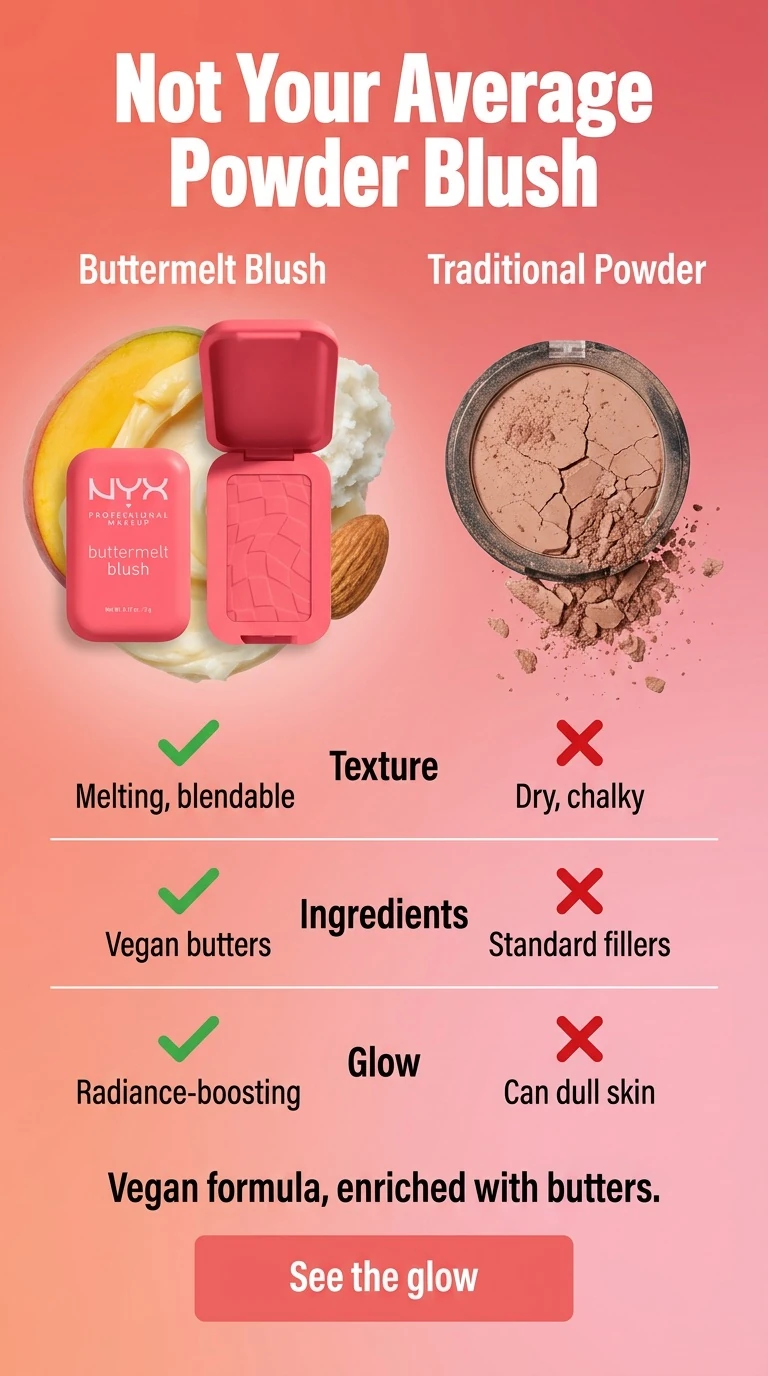
Real outputs from Upadz, each made from the product's own page: a 40 oz tumbler, a cream blush, a daily greens drink and dog probiotic chews. The claims on them come from those product pages; none of these is an ad the brand ran.



What are ad creatives?
Ad creatives are everything in an ad that a person actually sees or hears: the image or video, the text on it, the voiceover, the music, the headline and the button. They are made to do one job, which is to make the right person stop, understand the offer and act.
An ad is more than its creative. The same creative can run as many ads, to different audiences, in different placements, at different budgets. That is why ad platforms keep them separate. In Meta Ads Manager the campaign sets the objective, the ad set holds the audience, placements and schedule, the budget sits at the campaign or the ad set level, and the creative is added at the ad level, below both.
Ad creative formats, and angles
Single image: one still image, such as a product photo with a headline, a comparison or a list. Usually the simplest format to make and change. The 4 ads above are all single-image creatives; the static ads guide goes further into their layouts.
Video: from a person talking to the camera (UGC, creator or testimonial style) to a product demo or a motion-graphics edit. On Reels, Stories and TikTok the vertical 9:16 format fills the screen, and many people watch with the sound off, so captions and an on-screen hook do part of the work.
Carousel: several cards the viewer swipes, each with its own image or video and link. Useful to show several products, several features of one product, or the steps of a story.
Collection: a cover image or video with several products underneath, which opens into a full-screen storefront on mobile.
Catalog-powered ads are a way of delivering these formats rather than a format of their own: the platform fills an image, carousel or collection with products from your feed and picks which ones each person sees. The work there is in the feed (photos, titles, prices), not in one designed image.
The angle is a separate choice from the format: the same single image can carry a problem and its fix, a comparison, an offer, a customer review or a list. The 4 ads above use three of these: problem-solution, comparison and list. The product ads guide sorts 12 real Meta ads by angle.
How much does the creative matter?
Most figures in the table come from one analysis. In 2017, Nielsen and Nielsen Catalina Solutions measured how much each factor contributed to the sales lift from advertising across nearly 500 consumer-goods campaigns. Creative quality came first with 47%. Pages that quote “56% of sales ROI” are citing the digital-only figure, and the study measured the sales lift from advertising, not return on investment. The 65% often quoted next to it is older: it comes from the 2006 Project Apollo study.
The 2017 analysis also found that the share depends on how good the creative is: when the creative was weak, the sales lift was small and most of it came from media instead. In our view, that is the useful part for a small brand that cannot outspend anyone on reach: the creative is the part of the ad it controls directly.
From anatomy to testing
The 6 parts are also the list of things you can test. Change one part at a time, keep the others fixed, and you learn which hook, visual or proof moves results. The creative testing framework guide sets out how to run those tests, and the product ads guide shows how real Meta advertisers combine the parts.
A quick check before you launch an ad creative
- Can someone get the point in two seconds, with the sound off?
- Does the first line speak to one buyer's problem or wish, not to everyone?
- Is there one piece of proof they could check?
- Is the text clear of the top and bottom of the screen in Stories and Reels?
- Do you have at least two versions with different angles to compare?
Make ad creatives with Upadz
Every Upadz concept fills in the parts above for your product: a hook, a message and a call to action written from research on your customer, so you choose between ideas before anything is rendered. The ones you keep become static ads at 6 credits (Faster) or 10 credits (Pro) per image or vertical video ads at a fixed 50 credits (720p) or 75 credits (1080p). The four ads on this page are real Upadz outputs.
Keep reading
Frequently asked questions
What are ad creatives?
The visual and written content of an ad: the image, video or carousel, the text on it, the headline and the call to action. The audience, budget and placement are part of the ad but not of the creative.
What is the difference between an ad and an ad creative?
The creative is what people see and hear. The ad is the creative plus its settings: who sees it, where, when and at what budget. One creative can run in many ads.
What are the main types of ad creatives?
By format: single images, videos (UGC, demos, motion graphics), carousels and collections; catalog-powered ads fill those formats from a product feed. By angle, separately: problem-solution, comparison, offer, social proof, list and others.
Is it true that creative drives 47% of sales?
Not of all sales. A 2017 Nielsen and Nielsen Catalina Solutions analysis found that creative quality accounted for 47% of the sales lift from advertising across nearly 500 consumer-goods campaigns, and 56% in digital campaigns. It measured the sales lift from advertising, not total sales or return on investment.
Can AI make ad creatives?
Yes. AI tools can write ad concepts and copy and render images and videos. The result still needs a person to choose the angle, check every claim and test the versions against each other.
Facts checked on against Nielsen (2017): When it comes to advertising effectiveness, what is key?, Nielsen (2017): Perspectives: Want a successful ad? Get creative, MarketingCharts (2017): the study's figures by media type, IAB Australia (2018): The role of creative in digital advertising effectiveness (sales contribution chart). Prices and features change; tell us if something is out of date.
Make your next ad creatives
Compare ad concepts for your product before you render anything.
Start free