Andromeda Meta Ads: What It Is and What It Changes for Your Creatives
Andromeda is the system Meta uses to pick which ads get a chance to be shown to each person. Most of what is written about Andromeda Meta ads mixes Meta's own words with agency guesses. This guide uses only what Meta has published, dated and linked, and marks everything else as a claim.
Updated
The short answer
Andromeda is Meta's ad retrieval engine: the first step of ad delivery, which narrows tens of millions of eligible ads down to a few thousand candidates for each person before other models rank them. Meta introduced it in 2024 and links it to creative diversification: the more genuinely different ads you give the system, the more options it has to match one of them to each person.
Meta's engineers report +6% recall in retrieval and +8% ads quality on selected segments. Meta does not publish how similar two ads can be before they are treated as one, nor a number of ads to run.
How Meta picks an ad, and where Andromeda sits
1. You upload ads
Every active ad from every advertiser that could be shown to this person is a candidate. Meta's engineers put the pool at tens of millions of ads, and expect it to grow as AI tools make more creatives.
2. Retrieval: Andromeda makes the shortlist
As the feed loads, Andromeda narrows those tens of millions down to a few thousand ads for this person. An ad that is not retrieved never reaches the next step. This is the part Andromeda changed.
3. Ranking: other models choose
Larger ranking models, such as the one Meta calls GEM, estimate the value of each shortlisted ad for the person and for the advertiser, and the final ads are chosen from there. Andromeda does not run this step.
What Meta has said about Andromeda, and what agencies claim
| Criteria | What Meta has said | What you will also read | Status |
|---|---|---|---|
| What it does | Retrieval: narrows tens of millions of ads to a few thousand per person; ranking models choose after that | That Andromeda ranks ads or replaced the whole ad system | Not what Meta says: it is the retrieval step |
| When | Introduced in 2024; described in detail on 2 December 2024 | That it rolled out quietly in 2025 | Meta's posts say 2024 |
| Results | +6% recall in retrieval; +8% ads quality on selected segments | 17% more conversions at 16% lower cost after restructuring | Only the first is Meta's; no source is shown for the second |
| Similar ads | Ads that look or feel alike are grouped and treated as variations of one creative | Each group gets one “Entity ID” and one ticket to the auction | Grouping confirmed; “Entity ID” is not a Meta term |
| How similar is too similar | Not published. Meta says it doesn't share how its models represent individual creatives | A similarity score above 60% merges ads; keep it under 40% | No Meta source |
| How many ads | No number. Leaders launch new ads every week (2024 advice) | 8–15 ads per ad set, or 8–12 concepts with 2–3 versions each | Agency practice, not a Meta rule |
| Targeting | The focus has shifted from niche targeting to creative diversification as the best lever | Targeting no longer matters | Meta says creative is the bigger lever, not that targeting is gone |
Meta Andromeda example: four different ads for one product
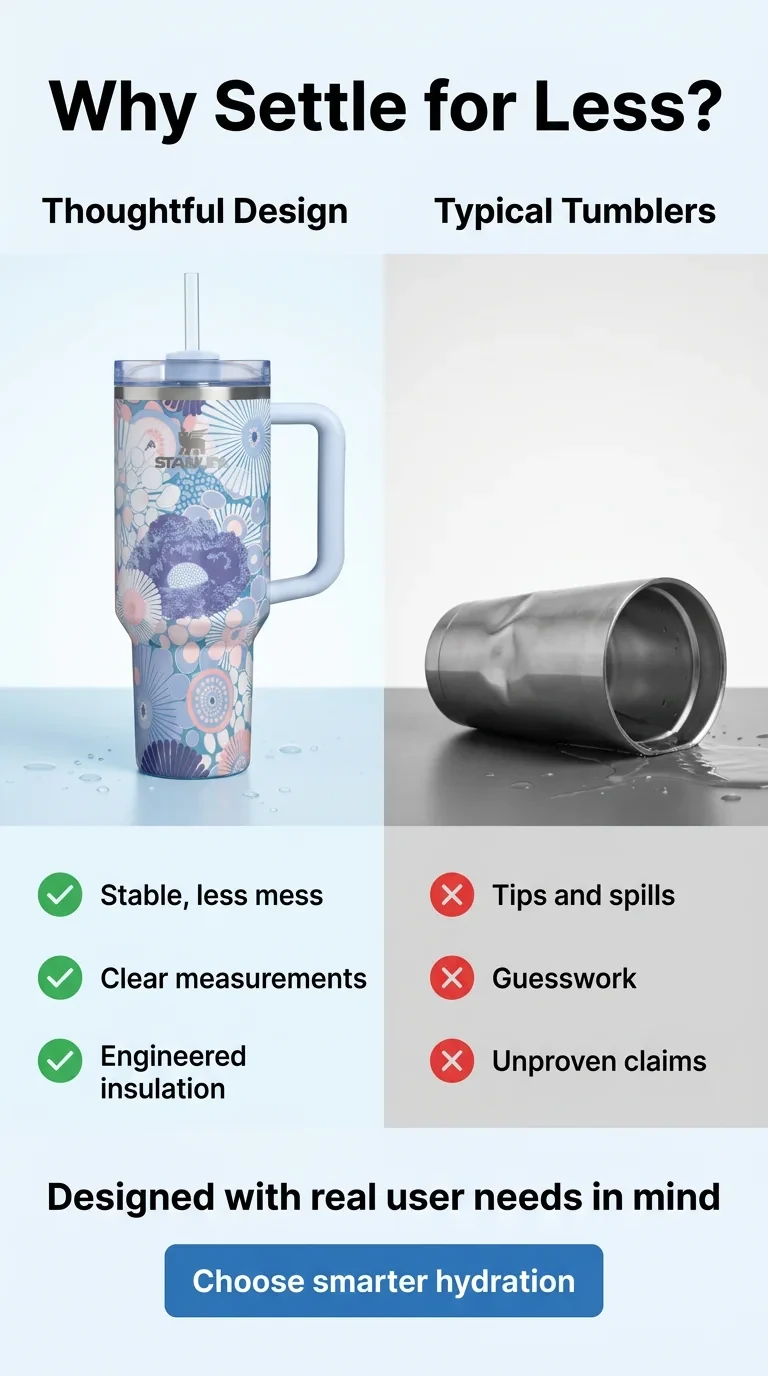
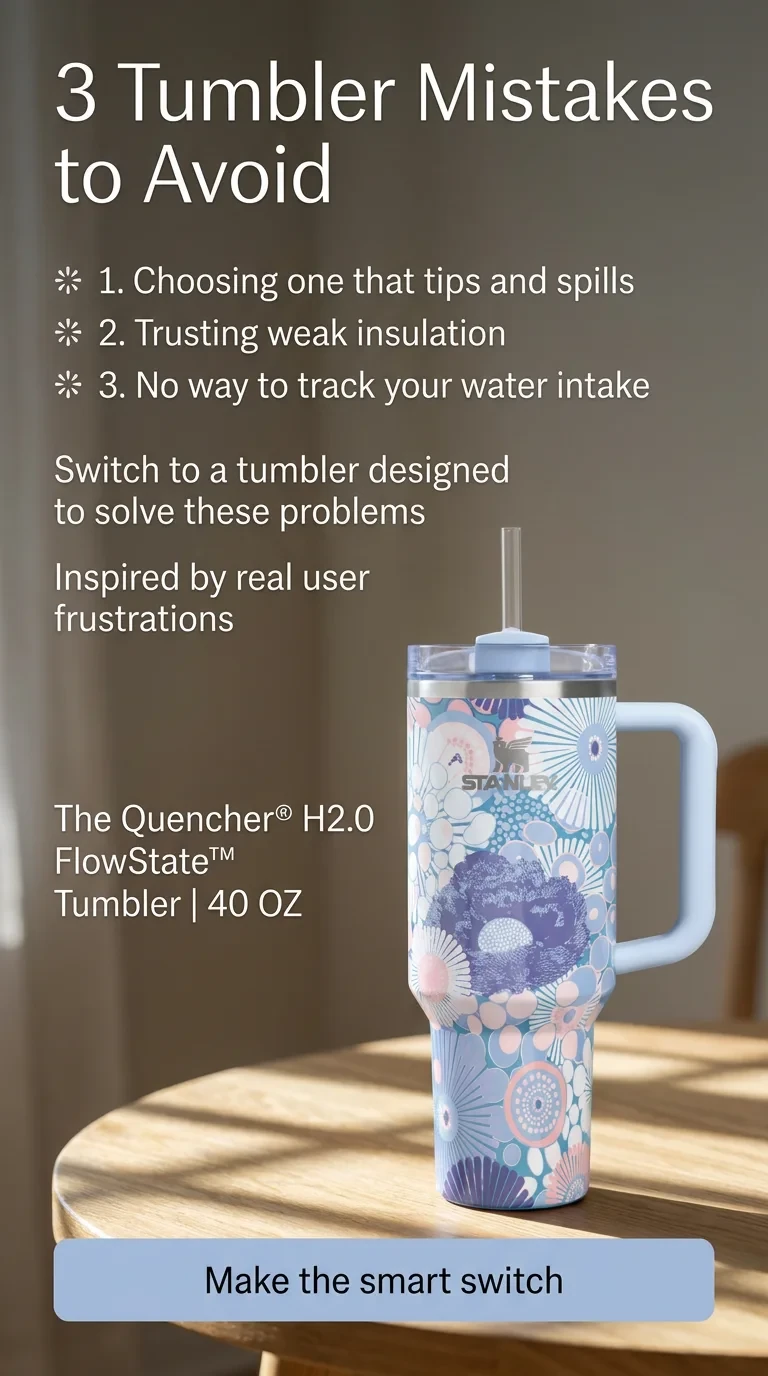
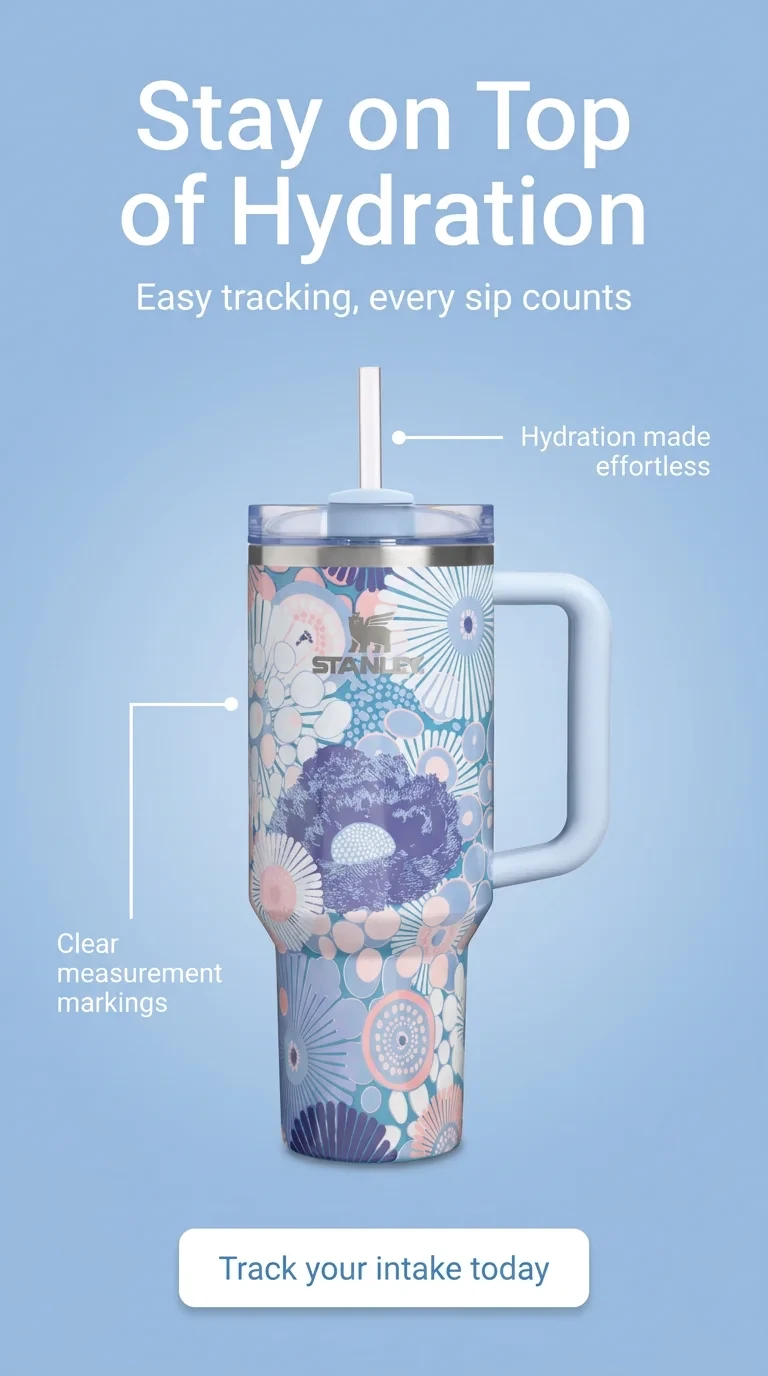
Four real Upadz outputs for the same 40 oz tumbler, each a different concept: a problem and its fix, a comparison, a list of mistakes and a product callout. This is what Meta calls diversification. Four copies of the first ad with a different headline each would be iteration. These were made from the product's page; none is an ad the brand ran.

What is Andromeda in Meta ads?
Andromeda is the part of Meta's ad system that decides which ads are even considered for you. When someone opens Facebook or Instagram, it scans the pool of eligible ads and keeps a few thousand. Meta's engineers describe it as a personalized ads retrieval engine that runs on NVIDIA Grace Hopper chips and Meta's own MTIA chips.
What changed is the size of the model doing that first cut. Meta says Andromeda allowed a 10,000x increase in the complexity of its retrieval models. The older system, in Meta's words, relied on isolated model stages and numerous rule-based shortcuts, which limited how personal the shortlist could be.
One reason Meta gives is creative volume. The December 2024 post says Advantage+ and generative AI tools are expected to grow the number of ad creatives significantly, and Andromeda's index is designed to handle that growth.
The Andromeda Meta ads update: a short timeline
December 2024: Meta's engineering blog describes Andromeda, with +6% recall in retrieval and +8% ads quality on selected segments.
March 2025: Meta for Business lists Andromeda next to GEM, Lattice and sequence learning, and ties it to advertisers who upload more creatives for a diversification strategy.
April 2025: a Meta for Business post defines creative diversification and calls it the best lever to find relevant audiences.
December 2025: Meta explains that its system groups ads that share key visual and thematic attributes, and separates creative fatigue from creative similarity.
There was no single switch-on date that advertisers could see. What people call the Andromeda update is this series of changes and the advice that came with it.
Creative diversification versus iteration
Meta draws the line itself. Iteration is two ads with the same visual and different text, such as a new call to action on the same image. Diversification is two ads that are different pieces of creative, made for different people or uses. Meta's December 2025 example: a Reels ad for Gen Z and a separate creator ad aimed at new moms.
This matters for Andromeda because similar ads are grouped. Meta says that when ads look or feel alike, learning and delivery are shared at the creative level, not ad by ad. Ten small edits of one image may be read as one creative, not ten options.
In the four ads above, the product is the same but the scene, layout, message and reason to buy change from one to the next. That is the kind of difference Meta describes as different look, feel, storyline and message.
Creative fatigue, creative similarity and “Creative limited”
Creative fatigue is overexposure: the same people have seen the same image or video too often, so engagement falls and cost per result rises. Creative similarity is a lack of visual variety: ads that are technically different files but look too alike. Meta notes that high similarity can also cause fatigue, because people see the ads as repetitive.
Meta's small-business guidance says that when creative is too similar, the system may not recognise it as different and may deliver it to the same people. That can show as a Creative limited or Creative fatigue status in the Delivery column of Ads Manager.
What changes for your campaigns
Meta's own advice since 2025 is short: diversify the creative, test, and let the system optimise. Its December 2025 best practices add three points: make ads that differ in look, feel, storyline and message; speak to different motivations, such as one ad on emotion and one on product features; and run a mix of these concepts together.
Advertisers have drawn more from this, and those are practices, not Meta rules: fewer ad sets with broad targeting, more ads per ad set, and new concepts on a regular schedule. Jon Loomer notes that Meta's older advice of no more than six ads per ad set has disappeared from its guidance, which he links to Andromeda. Test changes like these against your own results, and judge them on cost per result and return on ad spend, not on the number of ads live.
Checklist: what Andromeda changes for your creatives
- Would a stranger sort your ads into different piles at a glance? If they all look alike, Meta may treat them as one creative.
- Does each ad have its own reason to buy (a problem, a comparison, a proof, an offer), not only a new headline?
- Do you have more than one format: static, video and, where it fits, carousel?
- Does each concept speak to a named buyer or use, such as a gift buyer, a first-time buyer or a repeat user?
- Is there a new concept in your next batch, not only a new version of last month's winner?
- Have you checked the Delivery column for Creative limited or Creative fatigue?
Make different ads, not copies, with Upadz
Upadz starts from research on your product and its buyers and writes several ad concepts, each with its own angle, hook and message, so you choose between ideas before anything is rendered. The ones you keep become static ads at 6 credits each or vertical video ads at 50 credits (720p) or 75 credits (1080p). The four tumbler ads on this page are real Upadz outputs.
Keep reading
Frequently asked questions
What is Andromeda in Meta ads?
Meta's ad retrieval engine. It is the first step of ad delivery and narrows tens of millions of eligible ads to a few thousand candidates for each person. Ranking models then pick the ad that is shown.
When did the Meta ads Andromeda update happen?
Meta says Andromeda was introduced in 2024 and described it on its engineering blog on 2 December 2024. The creative advice around it followed in Meta for Business posts in March, April and December 2025.
How many ads do I need for Andromeda?
Meta has not published a number. Its advice is to run ads that are truly different from each other and to keep adding new ones. Numbers such as 8–15 ads per ad set come from agencies, not from Meta.
What is an Entity ID in Meta ads?
A name agencies use for a group of similar ads. Meta confirms that it groups ads that look or feel alike and treats them as variations of one creative, but it does not use the term Entity ID or publish a similarity threshold.
Does Andromeda only work with Advantage+ campaigns?
Meta describes Andromeda as part of its ad delivery system and says it increases the impact of Advantage+ automation and its generative AI tools. It does not say Andromeda is limited to Advantage+ campaigns.
Does targeting still matter after Andromeda?
Meta says the focus has shifted from niche targeting to creative diversification as the best lever to find relevant audiences. That makes creative the bigger lever; it does not remove targeting settings from Ads Manager.
Facts checked on against Engineering at Meta (2 Dec 2024): Meta Andromeda, the next-gen personalized ads retrieval engine, Meta for Business (27 Mar 2025): AI innovations in Meta's ad ranking, Meta for Business (22 Apr 2025): The creative advantage, diversification with Meta Andromeda, Meta for Business (16 Dec 2025): Demystifying creative diversification, Meta for Business: Successful ads tell a story in more ways than one (creative differentiation), Meta for Business (19 Nov 2024): Three steps to optimize your performance with creative diversification, Marketing Brew (28 Sep 2026): How advertisers are adjusting to Meta's creative diversification best practices, Jon Loomer: Meta Andromeda, what it means for your ad strategy (ads per ad set). Prices and features change; tell us if something is out of date.
Give Andromeda different ads to choose from
Compare several ad concepts for your product before you render anything.
Start free